
The Scandinavian Institute of Climate Resilience (SICR) was founded on a simple but urgent premise: environmental risk is no longer a peripheral concern. It is a structural force reshaping economies, institutions, and ecosystems. Climate volatility, water stress, supply chain disruptions, biodiversity loss, and regulatory transformation are no longer isolated phenomena. They are interconnected pressures redefining how value is created, protected, and sustained.
In this evolving landscape, reactive approaches are insufficient. Compliance alone does not guarantee stability. Reporting does not ensure preparedness. Sustainability narratives, while important, do not necessarily translate into adaptive capacity. SICR exists to advance a proactive, solution-oriented model of resilience, one that anticipates environmental threats, quantifies vulnerability, and integrates adaptation into strategic decision-making.
From Risk Awareness to Strategic Resilience
Environmental challenges today are recurring, systemic, and increasingly nonlinear. Extreme weather events disrupt infrastructure and logistics. Water scarcity constrains industrial productivity. Ecological degradation undermines long-term resource availability. Regulatory shifts reshape market conditions with little warning. These dynamics threaten not only climate stability but also economic development and ecosystem integrity.
SICR approaches these challenges through a forward-looking lens. Rather than asking how organizations can respond after disruption occurs, we ask how they can design systems capable of withstanding and adapting to stress before crises materialize. This requires moving beyond emissions accounting toward structural resilience - assessing supply chain durability, infrastructure preparedness, resource security, governance frameworks, and long-term risk planning.
A Proactive Philosophy
At the core of SICR’s philosophy is the belief that resilience must be built deliberately. It cannot be improvised during emergencies. It must be embedded in strategy, investment planning, operational design, and institutional culture.
A proactive approach means:
Identifying environmental vulnerabilities early
Quantifying exposure to climate and resource risks
Benchmarking preparedness against peers and sectors
Integrating adaptation into capital allocation decisions
Designing systems that absorb shocks without systemic failure
This perspective is particularly critical in regions where environmental shifts directly affect industrial productivity, energy security, and socio-economic stability. Climate change is not solely an environmental issue; it is a macroeconomic and geopolitical variable. Organizations that fail to internalize this reality risk operational fragility and long-term value erosion.
About the Scandinavian Institute of Climate Resilience (SICR)


Innovation Through Measurement
One of the central barriers to resilience is the absence of independent, comparative tools that evaluate adaptive capacity. Many organizations invest in sustainability initiatives, yet lack objective metrics to assess whether these measures truly enhance resilience.
SICR addresses this gap through the development of its proprietary Resilience Index, a research-driven analytical framework that transforms environmental adaptation into quantifiable intelligence. By measuring preparedness across multiple dimensions - including climate adaptation investments, infrastructure robustness, water and resource security, governance structures, and long-term environmental risk mitigation - SICR provides organizations with a structured understanding of their resilience profile.
Measurement is not an end in itself. It is a catalyst for improvement. By identifying strengths and structural gaps, benchmarking against industry peers, and translating data into actionable strategy, SICR fosters informed decision-making and targeted investment in adaptive solutions.
Safeguarding Economic Development
Sustainable economic development depends on environmental stability. Industries reliant on water, energy, logistics, and raw materials cannot operate effectively in conditions of systemic ecological stress. Financial markets increasingly recognize climate risk as financial risk. Governments are introducing adaptation-oriented regulations that reshape competitive landscapes.
SICR works at the intersection of environmental resilience and economic strategy. We support organizations in aligning climate adaptation with long-term competitiveness, ensuring that resilience investments are not viewed as costs, but as strategic safeguards that protect operational continuity and market credibility.
By promoting resilience-based benchmarking and advisory services, SICR contributes to an economic model that is durable rather than extractive, adaptive rather than reactive, and structurally prepared rather than temporarily compliant.
Protecting Ecosystems Through Strategic Alignment
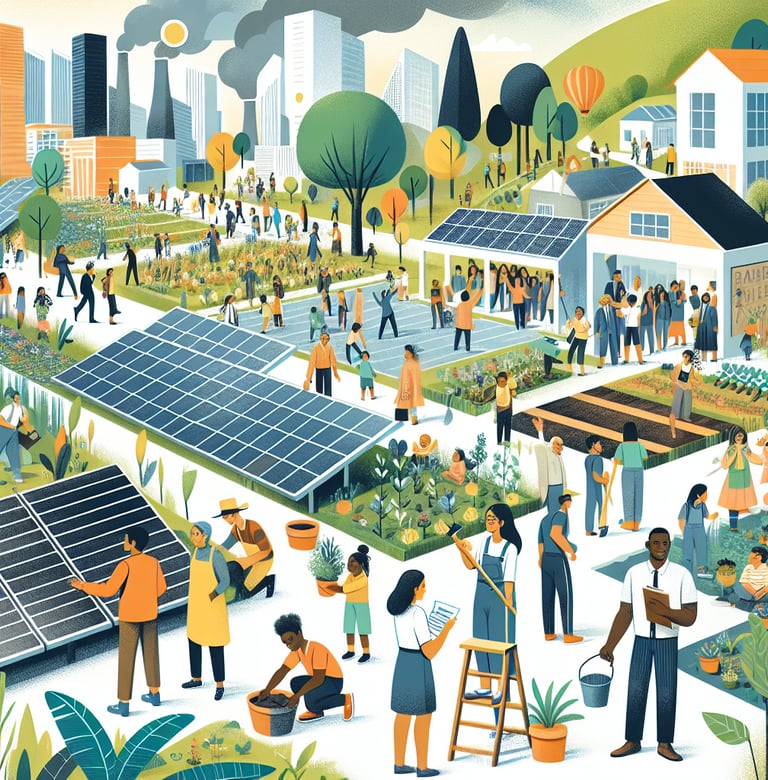
Environmental resilience is inseparable from ecosystem integrity. Industrial systems depend on functioning natural systems - from stable hydrological cycles to biodiversity-supported supply chains. Recurrent environmental crises signal that ecosystems are under stress, and without proactive intervention, degradation accelerates.
SICR’s approach encourages organizations to integrate ecosystem considerations into strategic planning, recognizing that long-term value creation depends on ecological balance. By embedding adaptation, resource stewardship, and environmental risk mitigation into corporate frameworks, resilience becomes a shared objective across economic and ecological domains.
A Scandinavian Foundation, A Global Outlook
Rooted in Scandinavian traditions of sustainability, transparency, and institutional trust, SICR combines regional expertise with a global perspective. The Nordic model has long demonstrated that economic dynamism and environmental responsibility can coexist. SICR builds on this heritage, translating research-based insights into practical tools applicable across sectors and geographies.
Our work is guided by scientific rigor, independence, and strategic clarity. We are committed to advancing resilience not as a rhetorical aspiration, but as a measurable and implementable standard for organizations operating in an era defined by environmental uncertainty.
In a world where environmental pressures are intensifying and interconnected, resilience is no longer optional. It is foundational. The Scandinavian Institute of Climate Resilience stands at the forefront of this transformation - developing proactive solutions that safeguard climate stability, strengthen economic systems, and preserve the ecosystems upon which both depend.